Enjoy the Rhine – but stay safe!

The Rhine is not safe for swimming

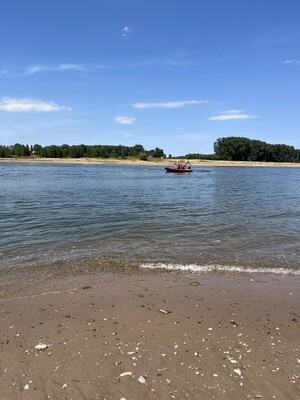
Few places shape Monheim am Rhein quite like the Rhine. On warm days, many people head to the riverbank to walk, cycle, relax or dip their feet in the water. But precisely because the river can look so calm and harmless at first glance, the dangers it poses are often underestimated. 

In fact, the Rhine is one of Europe’s most dangerous rivers. Beneath the surface, powerful currents, eddies and suction effects can be almost impossible to spot from the shore. Heavy shipping traffic, sudden changes in water depth and other hazards add to the risks and can put even experienced swimmers in life-threatening situations. Just a few steps into the water can be enough to lose your footing and be swept away by the current.


Why swimming in the Rhine can be deadly

The current is the greatest danger. Even close to the riverbank, it can be strong enough to sweep people off their feet and pull them into deeper water. Below the surface, unpredictable eddies, whirlpools and swirling currents pose an additional risk. Even strong swimmers have little chance of swimming against these forces.

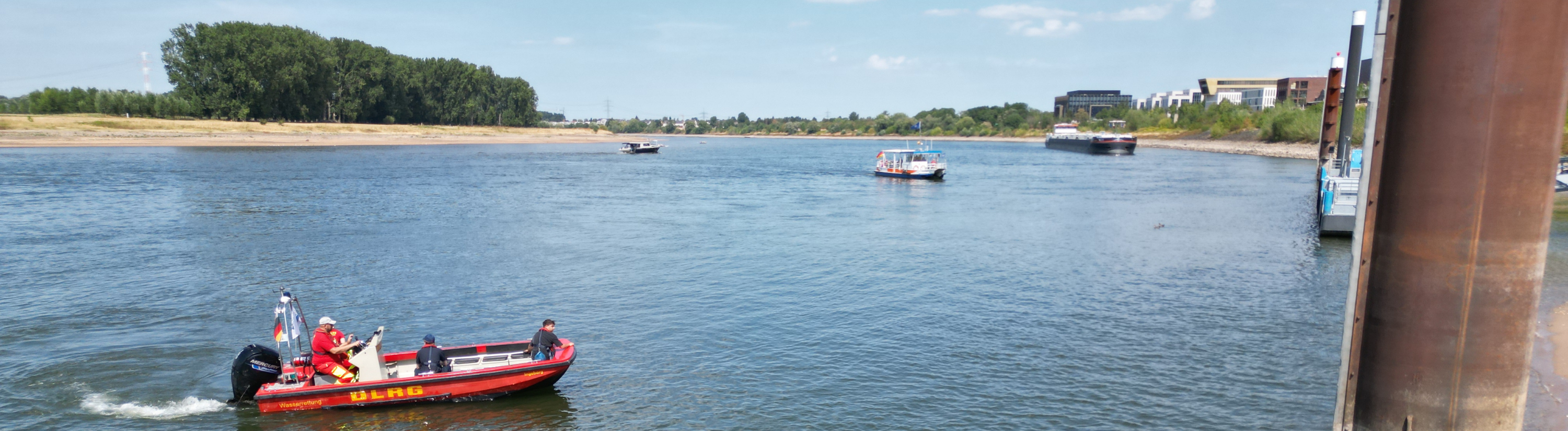
The Rhine is one of Europe’s busiest waterways. Large cargo vessels displace huge volumes of water, creating powerful suction and high waves. What makes these water movements particularly dangerous is that they often occur only after a vessel has passed. At the same time, crews may not spot people in the water in time, and vessels cannot take evasive action quickly because of their long stopping distances.

The riverbed is constantly changing. Steep drop-offs, deep holes, rocks, driftwood and other obstacles may be hidden beneath the surface. An area that appears safe can become dangerous just a few metres away.

Even on hot summer days, the water in the Rhine is much colder than many people expect. The sudden change in temperature can cause circulatory problems, muscle cramps or cold shock. At the same time, physical strength and stamina can quickly decline in cold water.

Rocks, driftwood, pieces of metal and other obstacles may be hidden beneath the surface. They are often impossible to see and can cause serious injuries when wading or swimming. Jumping into unfamiliar areas is therefore particularly dangerous.

Many people underestimate how physically demanding it is to swim in moving water. Trying to swim against the current can quickly lead to exhaustion. As fatigue sets in and strength fades, even strong swimmers can find themselves in a life-threatening situation.


In an emergency: call 112

In an emergency, getting help quickly is crucial. The Mettmann District emergency control centre can be reached 24/7 from landlines and mobile phones via the Europe-wide emergency number 112. If a call is initially answered by a neighbouring control centre, it will be transferred immediately to the appropriate one.

At the start of the call, you will first be asked which city you are in, followed by the exact location of the emergency. You will then be asked for further details about what has happened. This structured process helps ensure that the right emergency services are dispatched quickly and have the information they need before they arrive. The emergency control center will guide you throughout the call, even in stressful situations. If necessary, the operator will give you first-aid instructions over the phone until the emergency services arrive.

In an emergency on the Rhine, providing your location as precisely as possible is particularly important. Ideally, give the Rhine river kilometer ("Rheinstromkilometer"). If there is no sign nearby, you can also use the kilometer markers for Rhine shipping or distinctive landmarks such as bridges, groynes or ferry terminals. The more precisely you can describe the location of the emergency, the faster the emergency services can reach the right place. Depending on the device you are using, your location data may also be transmitted automatically to the emergency control center.

If there is a language barrier, the Mettmann District emergency dispatch center can use AI-powered translation. This makes it possible to communicate in more than 60 languages, helping ensure that the appropriate emergency services can be dispatched quickly.


Why the Rhine is especially dangerous for children

Even shallow water can be dangerous

Children face particular risks along the Rhine and should never play in or near the water without adult supervision. Because of their smaller size and lower body weight, even a relatively weak current can be enough to knock them off balance. Unlike in a lake or swimming pool, the Rhine’s current constantly pushes against the body and can exert considerable force even in shallow water.

Even ankle-deep water can be enough for children to lose their footing and be swept up by the current. Once a child is knocked off their feet, they can be carried into deeper or faster-moving water within seconds. Getting back to shore without help may then be impossible.

The riverbank is not necessarily safe

Many people assume that the greatest danger is in the middle of the river. In reality, dangerous situations can arise right at the water’s edge. An uneven riverbed, sudden drop-offs, or unexpectedly strong currents can cause children to lose their footing and be pulled into deeper water.

Passing vessels add another risk. Cargo ships initially create a suction effect, followed by strong return currents and high waves. These water movements often reach the riverbank and can catch children off guard, knock them over, or pull them farther into the river. The danger is particularly easy to underestimate because the strongest waves may not occur until some time after a vessel has passed.

Never leave children unattended near the water

Children have difficulty recognizing the dangers of the Rhine and may panic in unfamiliar situations. If a child is caught in the current, there may be very little time to help. Even adults can quickly find themselves overwhelmed, as the force of the water makes rescue extremely difficult.

For this reason, children should never be left unattended in or near the water along the Rhine. Even playing right at the water’s edge or wading in shallow water carries significant risks. The safest approach is to keep children in sight at all times and maintain a safe distance from the water.


What to do in an emergency

When the current gets strong

If someone accidentally falls into the Rhine and is swept away by the current, it is important to remain as calm as possible. Trying to swim against the current can quickly lead to exhaustion and make rescue even more difficult.

Instead:

  • Stay calm.
  • Keep your head above water.
  • If possible, float on your back.
  • Keep your feet pointed downstream to help protect yourself from obstacles.
  • When possible, swim diagonally across the current toward the shore.
  • Shout to attract attention.

Eddies and swirling currents

Eddies often form behind groynes or other structures, where the water flows in the opposite direction from the main current. If you are caught in an eddy, do not try to swim against it. Stay calm and move sideways out of the current.
If you are caught in a swirling current, try to move out of it calmly. Panicked movements will only use up more energy.


Helping someone without putting yourself at risk

If someone is in trouble in the Rhine, every minute counts. At the same time, it is important not to put yourself in danger as well.

The first step is always to call 112. Then describe the location as precisely as possible. The signs along the Rhine riverbank in Monheim help emergency responders pinpoint the location and save valuable time. If you cannot provide the location number, use prominent landmarks, bridges, or river kilometer markers to help identify the location.
Until emergency responders arrive, keep the person in sight at all times if possible. If available, throw them a life ring, throw line, or another object that floats.
Important: Never jump into the Rhine yourself or attempt a swimming rescue. The current can quickly put rescuers in life-threatening danger as well.


Location signs along the Rhine

Signs with unique location numbers will soon be installed at nearly all access points along the Rhine riverbank in Monheim. In an emergency, give this number to the emergency dispatch center. This helps the fire department, DLRG (Germany’s water rescue organization), and emergency medical services find the exact location more quickly and provide assistance without delay.

If there is no sign nearby, river kilometer markers or distinctive landmarks can also help emergency responders pinpoint the location.

Opening hours Phone Contact form Monheim Pass
Opening hours Bürgerbüro:
(Municipal Services Office):
Mon: 9:00 a.m. to 7:00 p.m.
Tue: 9:00 a.m. to 7:00 p.m.
Wed: 9:00 a.m. to 7:00 p.m.
Thu: 9:00 a.m. to 7:00 p.m.
Fri: 9:00 a.m. to 2:00 p.m.
Sat: 9:00 a.m. to 2:00 p.m.


Find the shortest wait!
City Administration & Bürgerbüro
(Municipal Services Office):
+49 (2173) 951-0
You can call us
at the following times:
Mon: 8:00 a.m. to 4:30 p.m.
Tue: 8:00 a.m. to 4:30 p.m.
Wed: 8:00 a.m. to 4:30 p.m.
Thu: 8:00 a.m. to 7:00 p.m.
Fri: 8:00 a.m. to 12:30 p.m.
Mit der Online-Terminvergabe haben Sie die Möglichkeit, längere Wartezeiten zu vermeiden.


Ihr Termin im Bürgerbüro
Nach oben